

The short answer: Toronto housing supply is shrinking much faster than demand. In August 2026, new listings across the GTA fell 14.1% from a year earlier while sales fell only 2.1%. Just 156 condos started construction in the City of Toronto in the first half of 2026, against a normal first half of about 7,000. Urbanation expects virtually no new condo completions in the Toronto and Hamilton area by 2029. Prices move last. Supply moves first.
Everyone waiting to buy a home in Toronto is worried about the same thing: prices. I think there is a bigger story, and almost nobody is talking about it. I have been a broker for more than 20 years and have been part of more than 3,000 transactions, and I have learned that the supply side of the market tells you where prices are going long before prices do. This guide is for buyers, sellers and owners who want to see the numbers before their next move.
Think of the market like a store with two doors. Buyers come in the front door, and sellers bring homes in through the back door. Almost every headline this year has been about the front door.
Buyer demand is flat, and I am not going to sugarcoat that. But I do not think it is because of affordability, or because people no longer want to own a home. Since June 2024, the Bank of Canada has cut its overnight rate from 5.00% to 2.25%, and it held there at every 2026 decision through September. Prices kept sliding anyway.
What is holding buyers back is confidence. The trade war with the United States, conflict in the Middle East and general uncertainty have all weighed on consumer sentiment. In TRREB's September 2026 release, Chief Information Officer Jason Mercer pointed to worries about trade with the United States as the main thing holding many households back. Buyers are cautious. They have not gone anywhere.
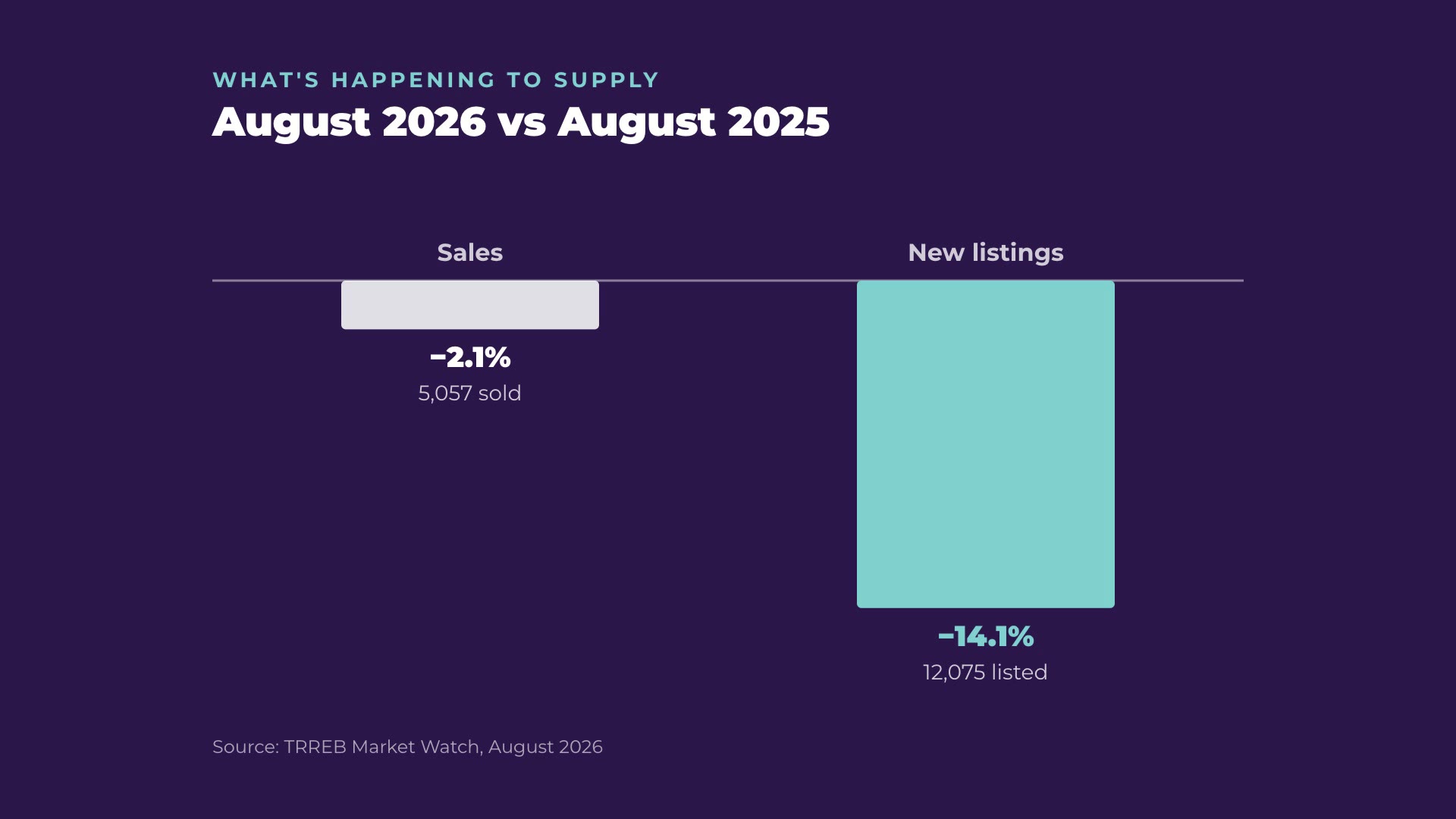
Now look at the back door. Sales across the GTA were down about 2% in August 2026 compared with a year earlier. New listings, the homes coming in the back door, were down 14.1%. For every step buyers took back, sellers took almost seven.
Do not take my word for it. TRREB's own September 2026 report put it this way: "Less choice and more competition between buyers could ultimately result in renewed price growth in the months ahead." It does not take a wave of new buyers to move prices. The same number of buyers as today, shopping for fewer homes, is enough.
Sales on their own tell you how buyers feel. Sales next to new listings tell you what is about to happen to prices. In January 2026, about 29 homes sold for every 100 new listings. By August it was about 42.

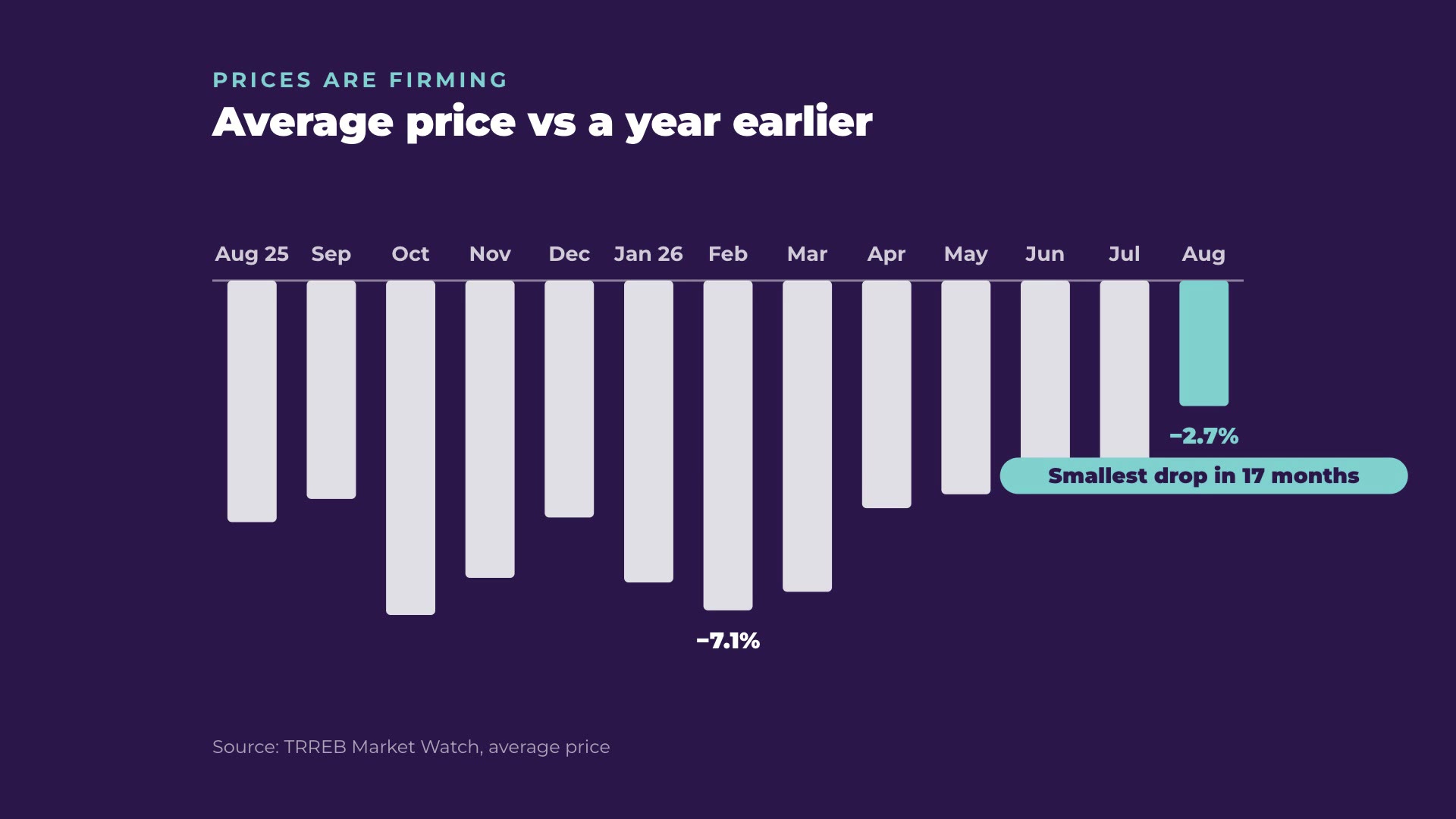
You can already see it in prices. In February 2026 the GTA average price was 7.1% below a year earlier. By August the gap had narrowed to 2.7%, the smallest year over year decline in 17 months. Prices are not firming because buyers came back. They are firming because there is less to buy.
My rule: If you want to know when a market turns, do not watch prices. Prices move last. Watch how much of the new supply gets bought. That always moves first.
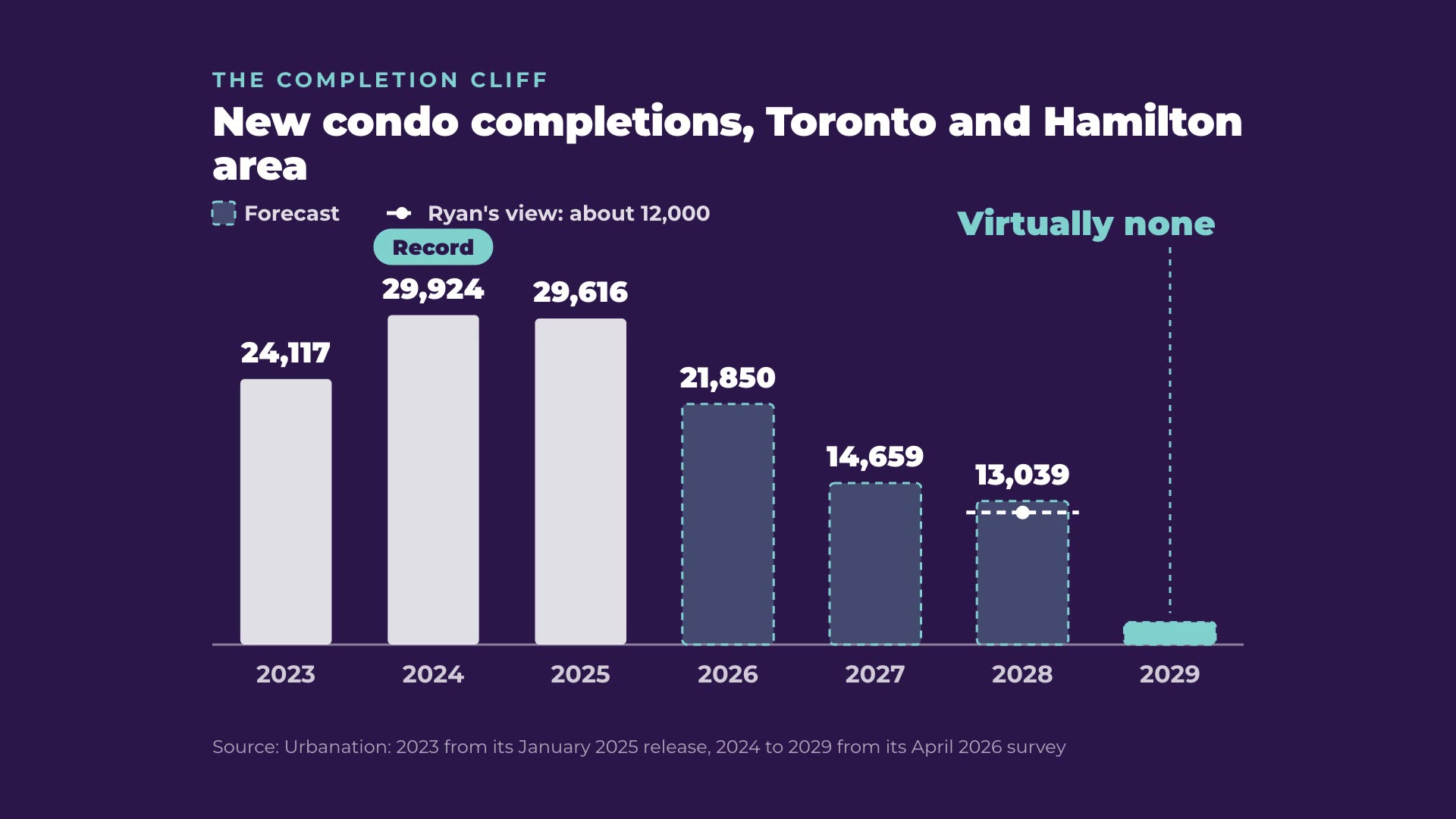
A completion is a newly finished home: the keys are handed over and someone moves in. New condo completions in the Toronto and Hamilton area are about to fall off a cliff, and that is not an exaggeration.
My own view is that 2028 lands closer to 12,000, because some projects scheduled for this year will slip into next year and some will be cancelled and never reach the market. Over the past decade, completions have averaged roughly 20,000 a year. We are heading toward a fraction of that.
Shaun Hildebrand, President of Urbanation, which has tracked the GTA condo market since 1981, said it plainly in January 2026: "By the end of the decade, we know with certainty that there won't be any new condo completions." Housing analysts rarely use the word certainty. He did.
Demand is hard to predict. Supply is measurable, because a condo that finishes in 2029 has to start now. So how many started? CMHC's Fall 2026 Housing Supply Report counted just 156 condo units breaking ground in the City of Toronto in the first half of 2026. In a normal first half, it is about 7,000.
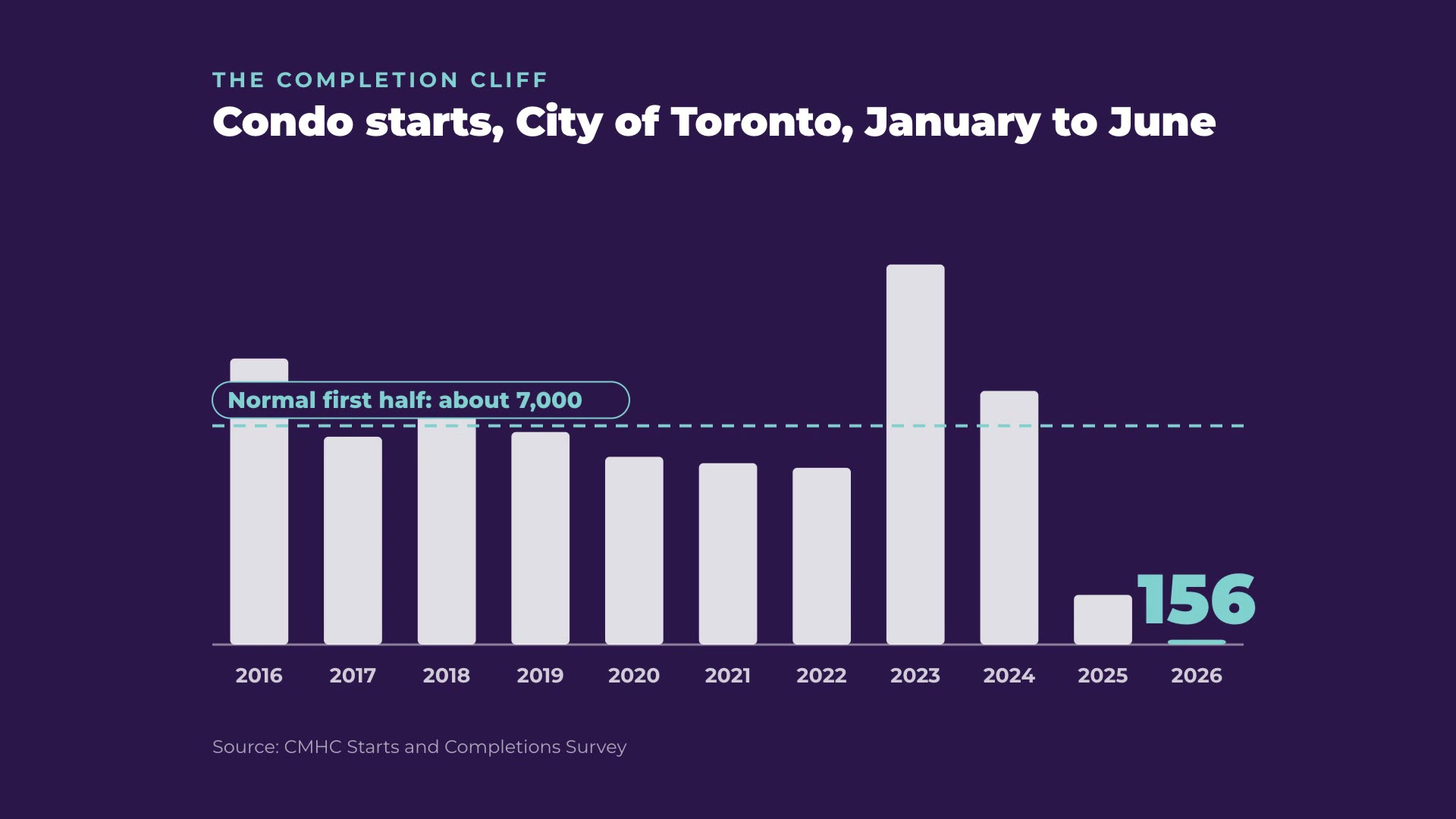
That door is closed for now. No rate cut reopens it and no government plan reopens it. From the first presales, to construction financing, to shovels in the ground, to handing over keys typically takes five to seven years. The homes that will be finished in 2029 and 2030 are the ones starting today, and very few are.
There have been big changes in the last few years: immigration policy, working from home and the economy. It is easy to conclude that demand for housing has collapsed. The numbers say something different. The demand moved from buying to leasing.
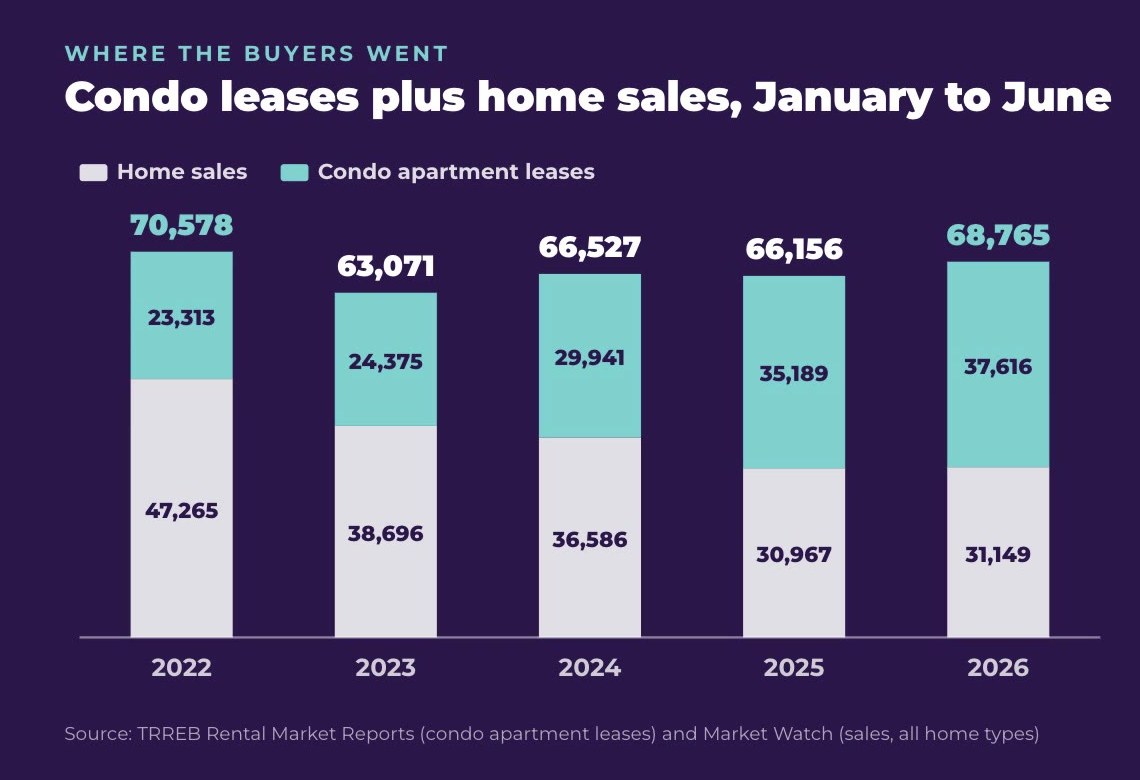
People who are leasing instead of buying are not gone. They are waiting on the sidelines until they feel confident again. When that confidence returns, that demand comes back to the buying side of the market.
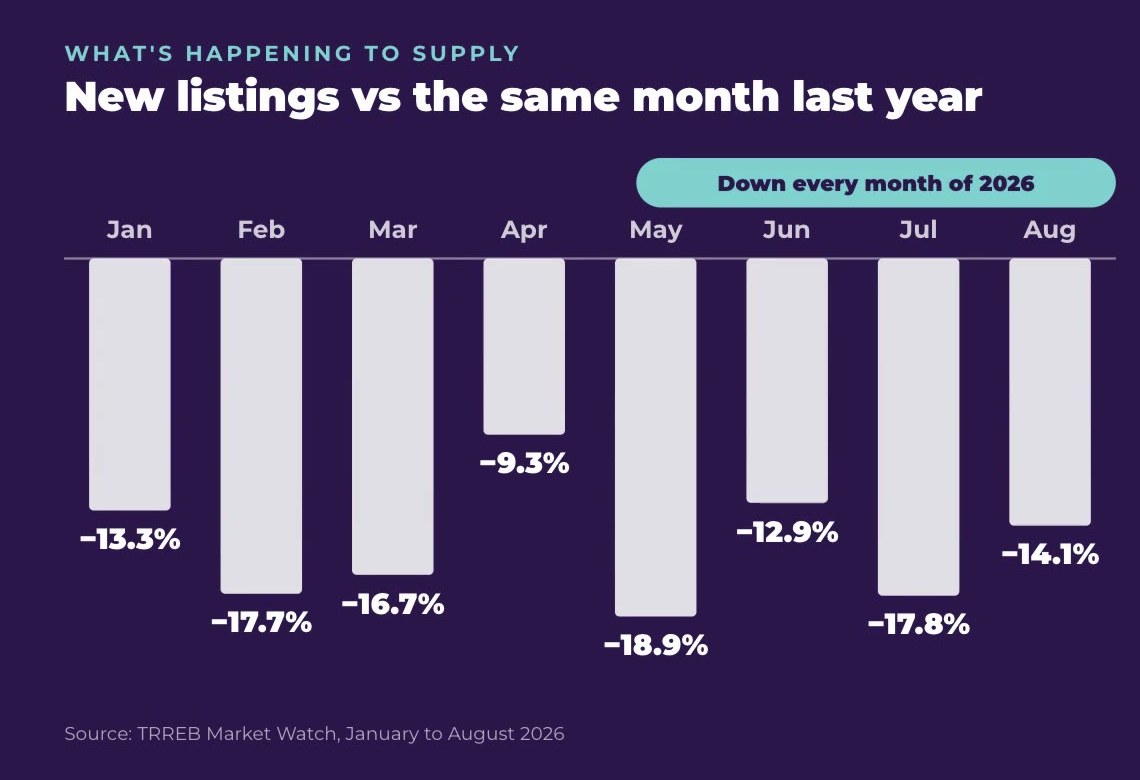
I cannot promise what prices will do, and nobody honestly can. What I can do is show you how I think about it. One side of the market is already decided: supply. Fewer listings every month this year, completions falling toward virtually none by 2029, and 156 condo starts in Toronto in the first half of 2026. Those numbers are not going to change much. The only real question is the buyers, and there are two ways that can go.
Buyers stay exactly as they are: careful, not rushing, but not gone. Even then, prices firm up. We saw it this year. Sales were flat, the share of new listings that sold went from about 3 in 10 to 4 in 10, and the price gap narrowed from 7.1% to 2.7%. Same buyers, fewer homes, prices firming slowly. That is the floor.
The economic picture improves, the tariff noise settles, people feel safe again, and the buyers who have been waiting step back in. Think about what they walk into: fewer listings and almost no new completions in the years ahead. Same shelf, a lot more shoppers. In that case, I expect prices to rise much faster.
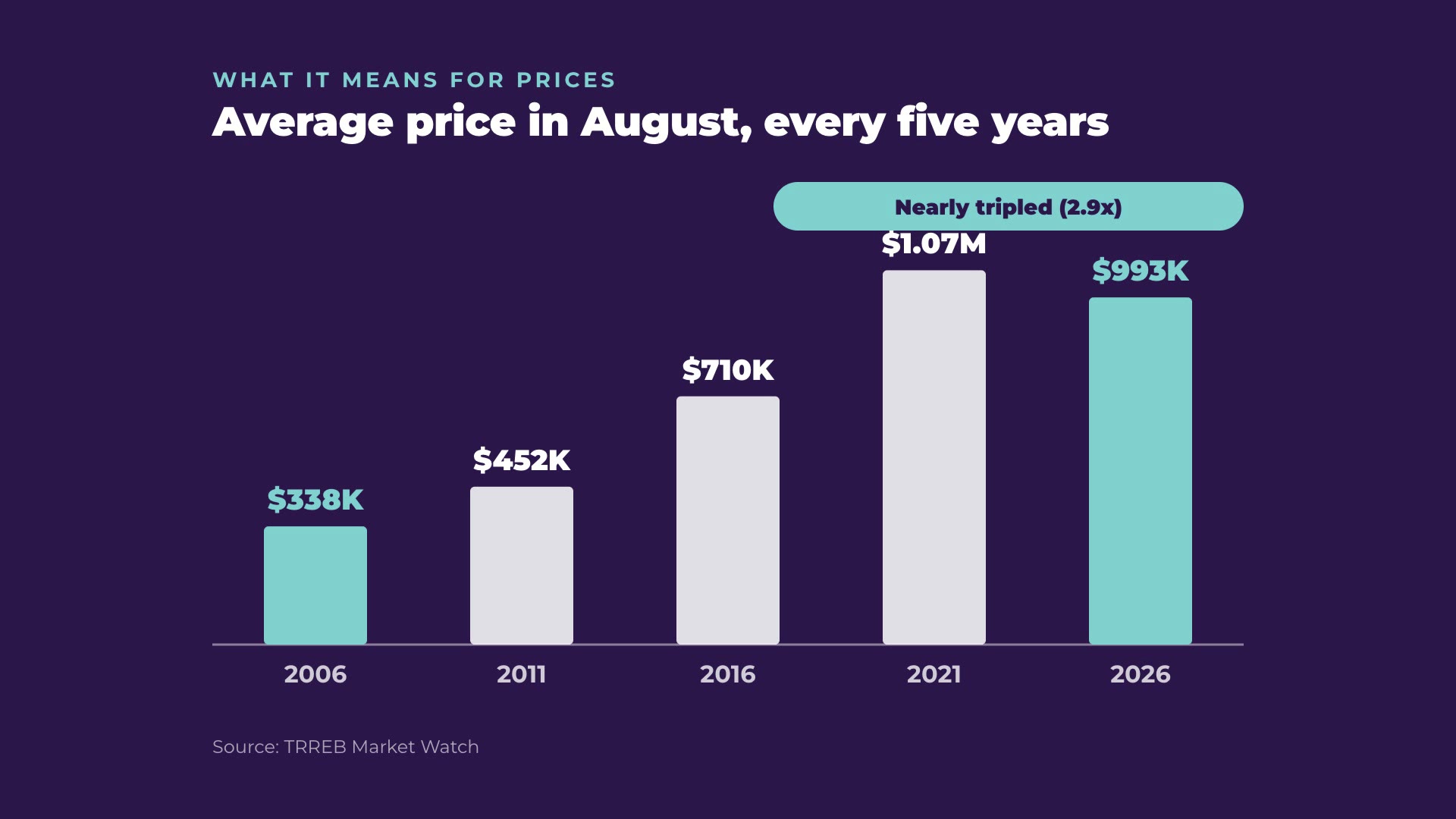
Where prices sit today matters too. Yes, they are down from the 2022 peak. But over 20 years, the average GTA price has nearly tripled, from $338,192 in August 2006 to $993,410 in August 2026, through a financial crisis, a pandemic and the slow stretch we are in now. Every dip before this one was erased. I see this as a dip, not a break.
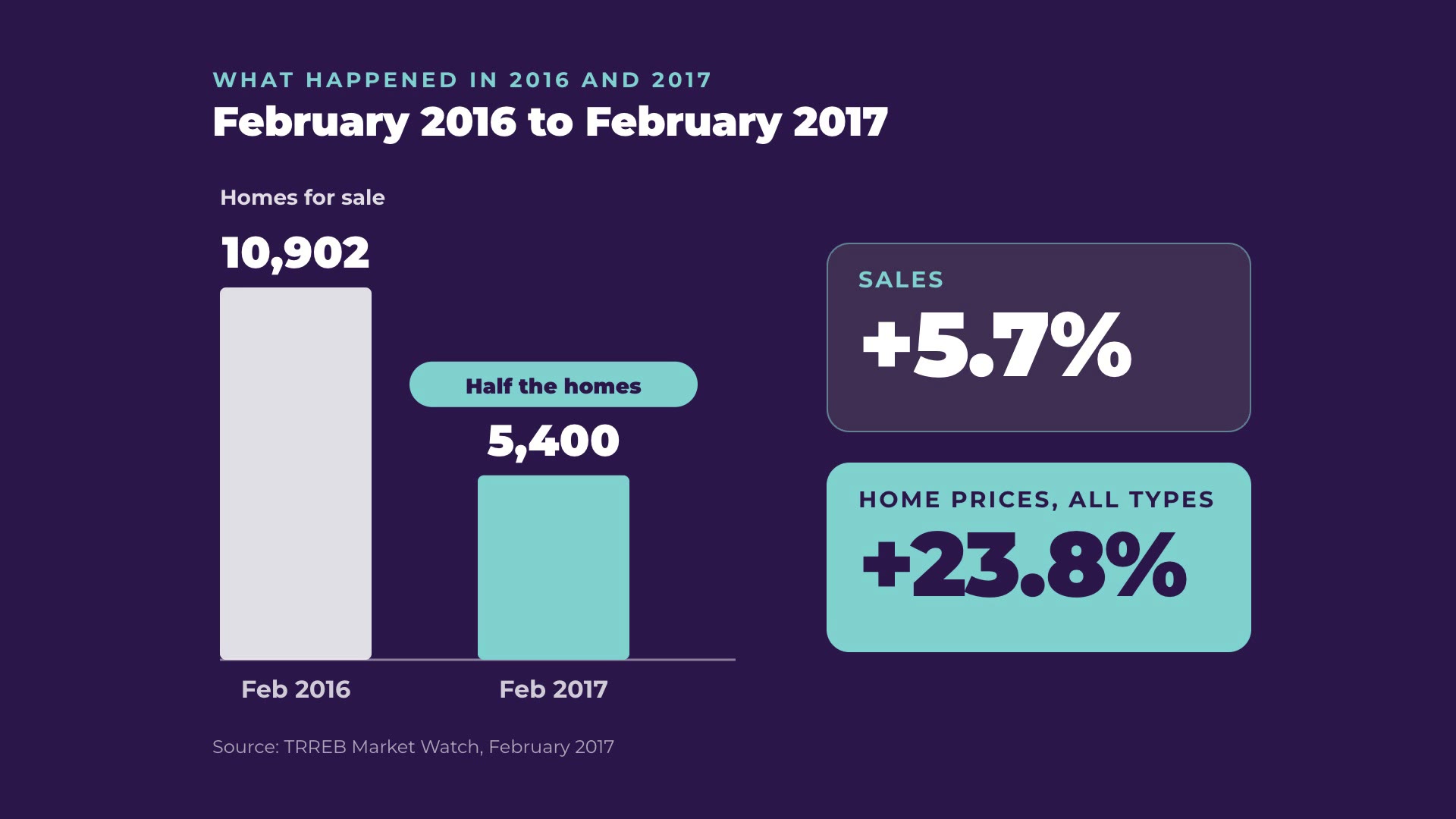
To look into the future, it helps to look at the past. In February 2016 there were 10,902 homes for sale across the area TRREB covers. One year later there were 5,400. Supply was cut in half.
Buyers did not surge. Sales rose only 5.7%. But home prices rose 23.8% in twelve months. Same buyers, half the homes. That is supply doing the work.
I want to be clear: I am not saying this happens tomorrow or next month. It will take time, and a few more things have to line up first. But this is what the data is telling us right now.
Before you make any big decision, look at today's market and at the projected supply where you live. If you would like me to pull those numbers for your neighbourhood and price range, get your free personal supply check. I look at listings, sales and the new homes coming to that area, and give you my read on what it means for your timing, with no obligation. You can also buy with Connect, sell with Connect, or read what the $1.5 million down payment cliff means for Toronto buyers.
New supply is falling sharply. GTA new listings were lower than the year before in every month of 2026, only 156 condos started construction in the City of Toronto in the first half of the year, and Urbanation expects virtually no new condo completions in the Toronto and Hamilton area by 2029.
Almost none. Urbanation forecasts new condo completions in the Toronto and Hamilton area falling from a record 29,924 in 2024 to 13,039 in 2028, and says virtually no new condos are expected to be delivered by 2029. Its president has said there won't be any new condo completions by the end of the decade.
Many owners are choosing not to sell in an uncertain market, so fewer homes are coming to market. In August 2026, new listings fell 14.1% from a year earlier while sales fell only 2.1%, according to TRREB. Sellers are pulling back almost seven times faster than buyers.
No one can promise that. The supply numbers point to firmer prices: the GTA average price gap narrowed from 7.1% below a year earlier in February 2026 to 2.7% below in August. If buyer confidence returns while supply stays this tight, I expect prices to rise faster.
A condo completion is a newly finished unit that is handed over to its owner, so someone can move in. Completions reflect projects that started construction several years earlier, which is why low condo starts today mean few new homes in 2029 and 2030.
It shows how much of the new supply buyers are absorbing. In the GTA it rose from 28.6% in January 2026 to 41.9% in August, my calculation from TRREB data. A rising share usually shows up in prices before the price data itself turns.
Request a free personal supply check at supply.connect.ca. Tell me the neighbourhood and price range you care about and whether you plan to buy or sell. I look at listings, sales and the new homes coming to that area, and give you my read on what it means for your timing.
This article is my own analysis of public data as of September 2026. It is not a forecast of any property's value. Watch the full video on my YouTube channel, @iamryancoyle.


