In parts of the GTA right now, a brand-new home costs $100,000 to $200,000 less than a comparable resale home in the same area. Builders are cutting prices and stacking incentives because new home sales are at historic lows, and the Ontario HST rebate (up to $130,000 in relief for eligible buyers on contracts signed before March 31, 2027) pushes the net price below resale. For the first time in decades, "new" is the discount option.
That flips one of the oldest rules in GTA real estate. For 30 years, new construction carried a premium. You paid more for the warranty, the finishes, and the right to be first. Today, in Holland Landing, Mississauga, Pickering and Richmond Hill, the math runs the other way. Here is why, and how to tell whether a new-build deal is real.
According to BILD and Altus Group, the GTA just recorded its worst new home sales year in roughly 45 years. Single-family housing starts are running about 63% below the 10-year average.
When sales collapse, builders face a hard problem. They have land carrying costs, construction loans, and lender presales requirements. A project that cannot hit its sales target cannot get financed, and a project that cannot get financed does not get built. So builders do the one thing resale sellers rarely do: they cut the price and add incentives to move inventory.
A resale homeowner who bought in 2021 or 2022 often has an emotional and financial anchor. Many would rather hold than sell below what they paid. That keeps resale asking prices stickier than builder pricing, even in a soft market. The result is a widening gap between what a builder will accept and what the house down the street is listed for.
On a resale home, there is no HST. On a new home, HST has historically been built into the price. That is a big reason new homes used to cost more.
The current rebate program changes that:
When a builder price cut, closing cost caps, free upgrades, and a full HST rebate all land on the same home, the net price can drop well below resale.
Net prices reflect builder pricing after incentives and applicable HST relief at the time of the video. Pricing and incentives change often. Confirm current numbers before making a decision.
A 4-bedroom detached at Queens Landing nets out around $950,000. The median resale price in the area sits near $1.15 million. That is roughly $200,000 less for a new home with a Tarion warranty, new mechanicals, and no immediate renovation budget.
At Trails of Whitevale, a 2,103 sq ft detached nets under $890,000 versus a $1.05 million resale median. That is detached living in Durham Region priced closer to what many buyers expect to pay for a resale semi.
The 9 townhouses come in around $685,000 net, compared with an $820,000 resale median. For first-time buyers in Peel, that $135,000 difference can be the gap between qualifying and not qualifying.
Everpine townhomes net about $899,000 against a 1.008million resale median. In a market where sub-900k freehold options are rare, that is a meaningful entry point.
A lower price is only a good deal if the rest of the contract holds up. Before you sign, review:
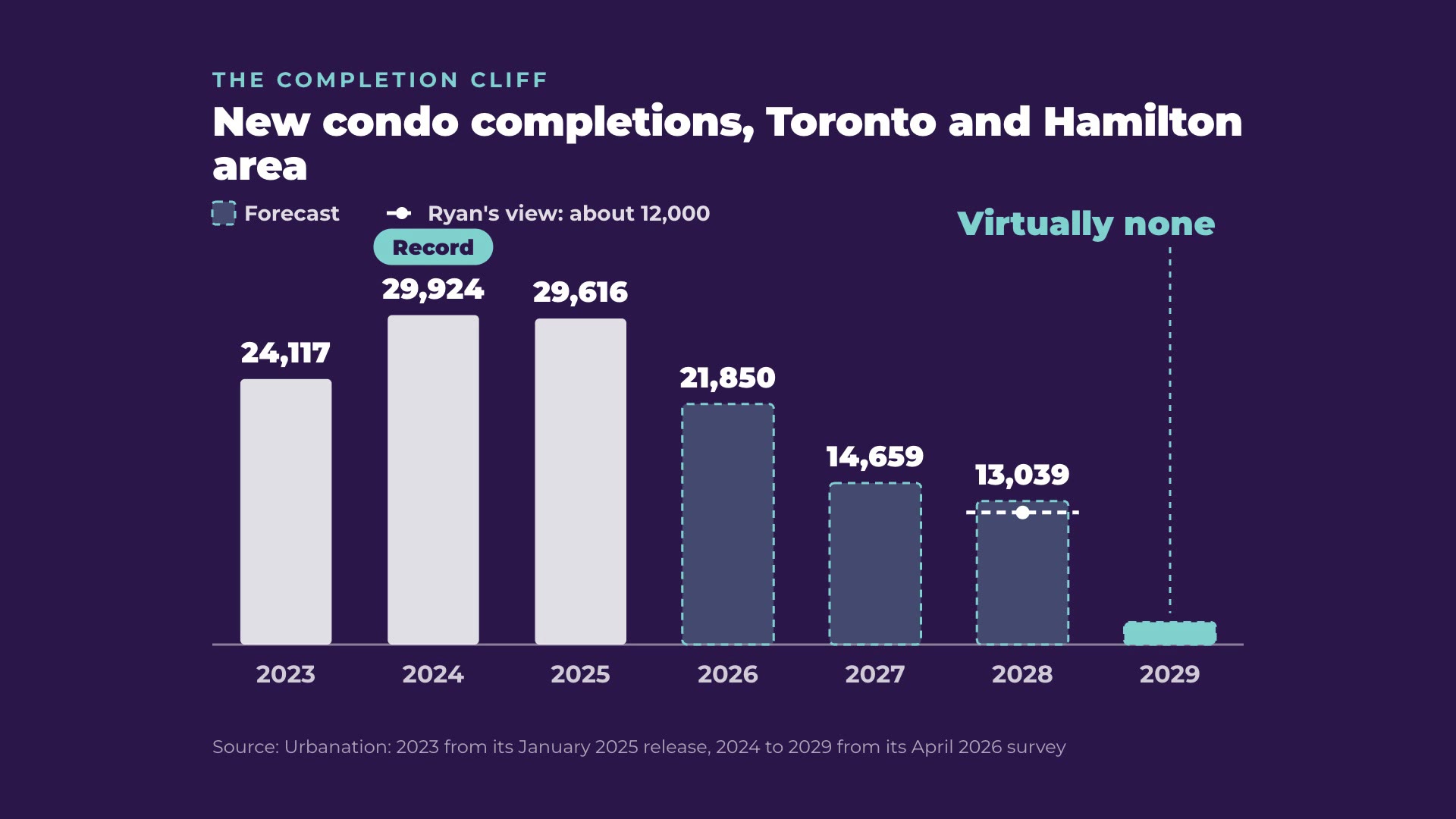
Low starts today mean low supply tomorrow. When single-family construction runs 63% below average, there are fewer new homes coming to market in 2028 to 2030. Builders will not keep selling below resale once demand recovers, and the HST rebate has a deadline. Buyers who lock in now are buying at the bottom of the builder pricing cycle, with a government incentive that expires.
That does not mean every new home is a deal. It means the best ones are better than anything we have seen in a generation, and they need to be vetted line by line.
In several GTA markets in 2026, yes. After builder price cuts, incentives, and HST relief, new homes in Holland Landing, Pickering, Mississauga and Richmond Hill are netting $109,000 to $200,000 below median resale prices.
Eligible buyers can receive up to $130,000 in combined federal and provincial HST relief on agreements signed before March 31, 2027. Eligibility depends on buyer status, price, and occupancy, so confirm with a real estate lawyer.
New home sales hit their weakest level in about 45 years, according to BILD and Altus Group. Builders need sales to secure construction financing, so they are discounting and adding incentives.
Watch for uncapped development charges, utility connection fees, Tarion enrolment fees, and HST adjustments. A closing cost cap in the agreement protects you.
With single-family starts around 63% below the 10-year average, future supply is shrinking. Once demand recovers and the HST rebate expires, the pricing advantage is likely to narrow.
If you can wait for occupancy and the contract has strong protections, new construction currently offers the better value in many GTA areas. If you need to move in within months, resale is still the practical choice.
If you're thinking through this for your own situation, I'm happy to walk you through the numbers. Reach out anytime at ryan@connect.ca, or send your details through this form and we'll get back to you.
About Ryan Coyle
Ryan Coyle is a Toronto real estate broker and investor with more than 20 years in the industry and over $2 billion in real estate transactions. He personally holds a portfolio of 40+ doors and helps buyers, sellers, and investors build long-term wealth through Toronto real estate. Ryan leads Connect, a full-service GTA brokerage focused on the downtown core and north Toronto's luxury market. Learn more at connect.ca.